

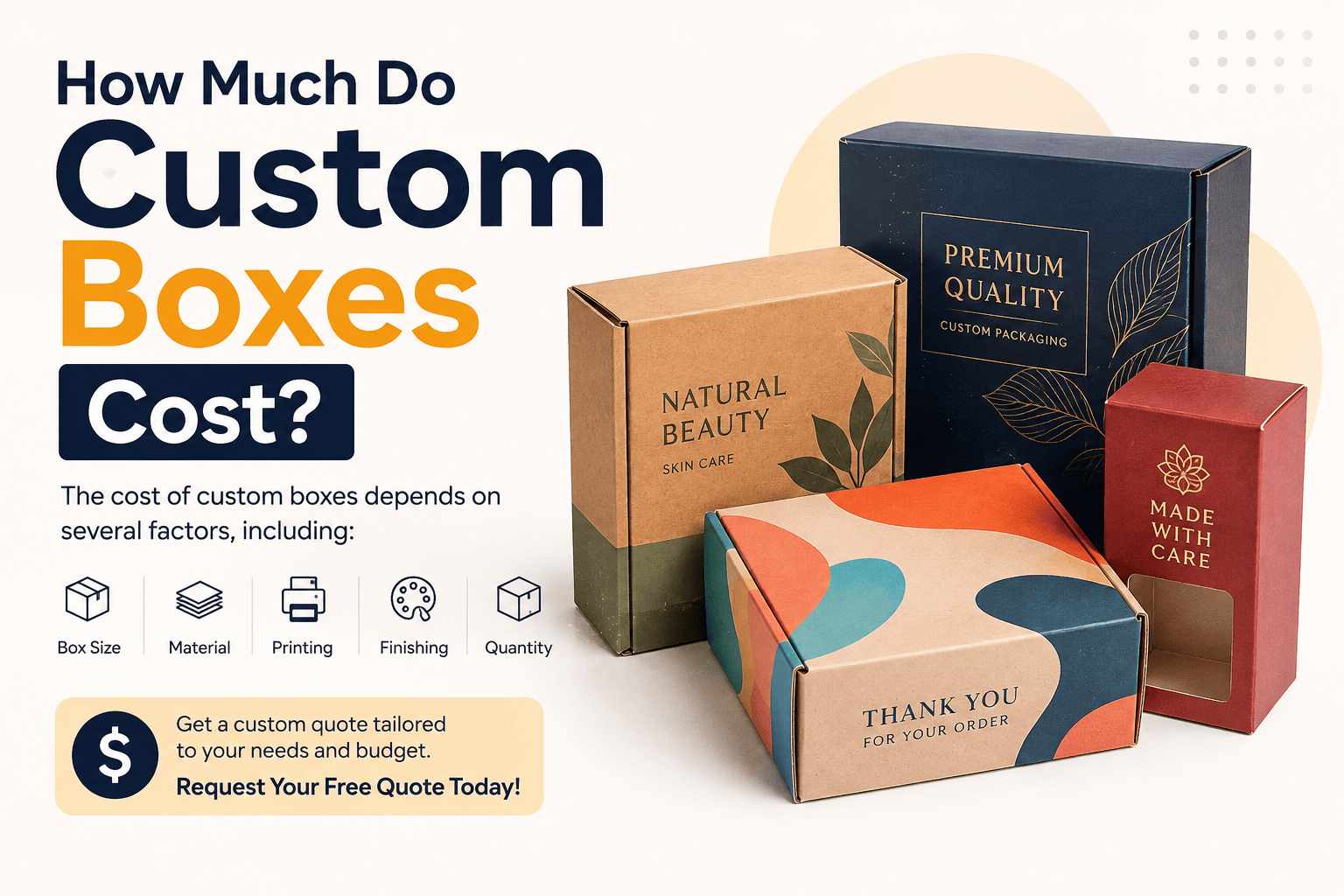
How Much Do Custom Boxes Cost?
When determining the cost of custom boxes, there are many different aspects that will help you find the right cost of your packaging. For example, material selection, box size, printing, finishing options, structural design and order quantities will all determine the overall cost of your packaging.
Materials: The Most Important Factor in Determining Your Overall Custom Boxes Cost
The first and largest determining factor of your overall cost of custom packaging is the materials selected. There are five major types of materials commonly used in custom packaging. Each type of material will have its own individual characteristics, benefits and costs associated with them.
1. Corrugated Cardboard
Corrugated cardboard is used primarily for e-commerce packaging and shipping due to its durability and protection capabilities. Its cost is determined by the type of flute used in the cardboard (A, B or C), the strength of the cardboard (24LB, 32LB etc.) and the quality of the paper used.
2. Kraft Paperboard
Kraft packaging is being used by a lot of environmentally conscious companies. It’s generally cheaper than other forms of packaging but supports green packaging programs. Since natural kraft printing uses less ink and no laminating processes are involved this can cut down on production costs as well.
3. Cardstock
Paperboard or cardstock is most frequently used for cosmetic packaging, food, pharmaceutical, and retail packaging. The cost of the paperboard will depend on the weight of the paper and the kind of coating.
4. Rigid Board
Rigid boards give your product a high-end look and superior protection. Due to the fact that rigid boards use more labor in their manufacturing process and have to be made out of thicker materials they are usually the most costly form of packaging.
Selecting the right material for your products protects your items while keeping unnecessary costs low.
Role of Dimensions or Size
Another variable that greatly impacts your custom box cost is how big or small your box needs to be. Larger boxes consume more raw materials and therefore increase manufacturing costs. It's necessary to get accurate measurements of your products. Large packaging causes:
• Consumption of excessive materials.
• Higher shipping costs.
• Additional warehouse space needed.
• More packing materials.
Packaging professionals will suggest measuring the products instead of using pre-made oversized sizes. The closer fitting packages produce less waste and allow for efficient shipping.
Printing Methods
Your custom box cost also includes the cost of printing. There are three main types of printing:
1. Digital Printing
Digital printing is suitable for smaller runs. It requires little to no set up time. The ability to easily change artwork and perform last minute art changes is a key advantage of digital printing. It is suitable for seasonal campaigns, new product launches and promotional campaigns is why it is preferred by many companies.
2. Offset Printing
Offset printing produces consistent color reproduction and a sharp image. Set-up costs are higher but after those costs have been paid off per unit prices decrease dramatically when printing larger volumes.
3. Flexography Printing
Flexography printing is a common choice for corrugated shipping boxes. It provides a low-cost alternative for companies with simple graphics and large production volumes.
Your decision regarding which printing method to choose depends on whether you want to spend money on complicated artwork or if you want to print a large amount of boxes at once.
Special Add-Ons Enhance Product Appearance and Add To Production Costs
Add-ons enhance the appearance of your product but add to the manufacturing cost.
Some examples of add-ons include:
• Matte lamination
• Gloss lamination
• Soft touch coating
• Spot UV
• Embossing
• Debossing
• Foil Stamping
• Window Patching
Volume Order Effects Total Cost Per Unit
The volume ordered has a direct impact on total cost per unit for your custom boxes. Smaller orders will normally have a higher unit price due to design setup time, die creation time, machine preparation time, etc., being spread out among fewer boxes. Larger orders, however, have lower unit prices since the manufacturing costs are distributed over a larger number of boxes.
If you know you'll need to ship certain products consistently, purchasing in bulk will likely yield better long term value.
Complexity of Structural Design
Easy-to-manufacture designs take less time and less money to manufacture than complicated designs that require specialized equipment and engineering. Examples of specialty features that could make your box more complex include:
• Magnetic Closure System
• Custom Inserts
• Two-Tiered Compartments
• Die-Cut Windows
• Locking Mechanisms
• Unconventional Opening Systems
While adding complexity to your design enhances customer experience, it adds expense for tooling and manufacturing.
Delivery Method Impacts Shipping Costs
Once the packaging leaves the factory floor, delivery costs are added onto your overall cost. Factors affecting shipping costs include:
• Size and weight of packaging
• Distance shipped
• Method of shipping (Ground vs Air)
• Weight and price of fuel
• Total number of boxes
Companies shipping international goods should also account for customs duty and taxes. They may also have to face warehouse storage fees.
Shipping and Logistics Costs
Packaging doesn't stop with manufacturing. Transportation costs vary based on:
· Package size
· Box weight
· Distance shipped
· Delivery method
· Fuel costs
· Order size
Design and Pre Production Costs
Before production starts, packaging designs need to be prepared. Services might include:
· Structural engineering
· Die development
· Graphic design
· Art adjustments
· Matching colors
· Producing samples
· Testing prototypes
These costs are usually one time but contribute to the overall budget.
How to Reduce Packaging Cost?
Packaging specialists often recommend these strategies to reduce packaging cost without compromising on quality:
1. Choose Right Material
Don't select heavier board grades unless strength really needs to be improved.
2. Reducing Artwork Complexity
Using fewer print colors and standard finishes can reduce production costs while still looking professional.
3. Order Larger Quantities
Bulk production usually significantly reduces unit price.
4. Standardize Package Sizes
Using consistent box sizes across different product lines simplifies inventory management and lowers manufacturing costs too.
5. Eliminate Features That Are not Necessary
Premium finishes raise production costs. Include features that deliver clear value.
Balancing Cost and Quality
Lowest cost packaging options are not always the best investment. Poor packaging:
· Damages products
· Increases returns
· Reduces customer satisfaction
· Raises replacement costs
· Weakens brand credibility
Conclusion
Understanding how much do custom boxes cost goes way beyond comparing quotes. Packaging cost depends on a number of factors including material selection, box size, printing quality, finishing, structural design, order quantity and shipping. A careful consideration of these elements can help in reducing your packaging cost. A reliable packaging manufacturer like Custom Printed Boxes Canada can help you in designing custom packaging that addresses your entire requirement.